How a UAE perfume house turned TikTok virality, Amazon dominance, and collector psychology into a billion-view fragrance phenomenon.
For decades, the rules of fragrance retail were clear: discovery happened at the department-store counter, prestige was validated by glossy ads, and purchases were made through selective retail.
While legacy perfume houses guarded their physical and digital counters, Lattafa went where the algorithm lives: Amazon for reach, TikTok for desire.
The brand’s ascent is a case study on packaging as an art, product velocity, and collector psychology, an interesting model that turns a $30 bottle into a shelf-stacking pursuit.
Amazon’s Grip on the New Fragrance Economy
Kayali, the Dubai-born label founded by Mona Kattan, built its name through Sephora before parting ways with the retailer earlier this year. Amouage, Oman’s heritage house, trades through its own boutiques as well as select department stores and online retailers, with prices ranging from $395 to $550. Lattafa, by contrast, has doubled its Amazon share since 2023 and generated more than $63 million in TikTok Shop sales in a single year, a 174-percent increase (WWD).
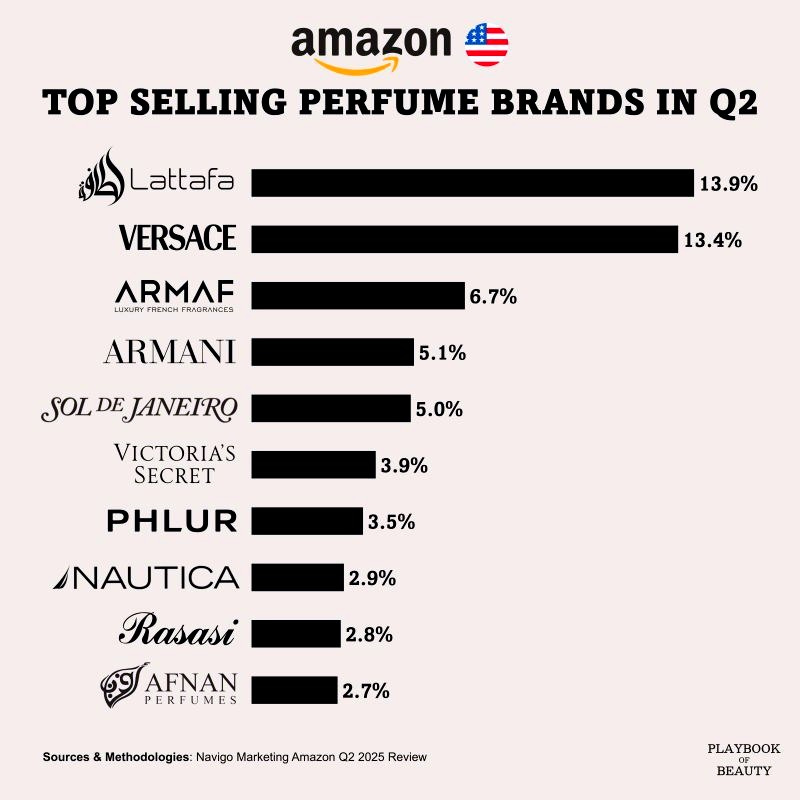
So while Sephora and Ulta value controlled prestige, Amazon thrives on omnipresence. Lattafa’s storefront reads like a search engine with titles packed with “vanilla,” “rose,” “oud,” and “citrus,” the exact words that drive discovery. For the brand, Amazon isn’t a secondary outlet; it’s centre stage. The payoff has been striking: in Q2 2025, Lattafa captured the largest share of perfume sales on Amazon US, ahead of Versace and Sol de Janeiro (Navigo Marketing)
Blind Buying as Cultural Shift
COVID changed how consumers shop for fragrance. Buying unseen became normal. “Four years ago… there was this completely organic growth where people began talking about Lattafa,” said Abdul Rahim Shaikh, head of R&D and son of the cofounder, referring to blind buying as the spark (WWD).
At £20–40 a bottle, the risk feels small. TikTok reviews and “shelfie” hauls complete the feedback loop, replacing the in-store tester with social validation.
As one Reddit user put it: “Lattafa is a good buy for the price—long lasting and well projecting. They’re king of the affordable dupes.”
Pop-ups as a Prestige Bridge
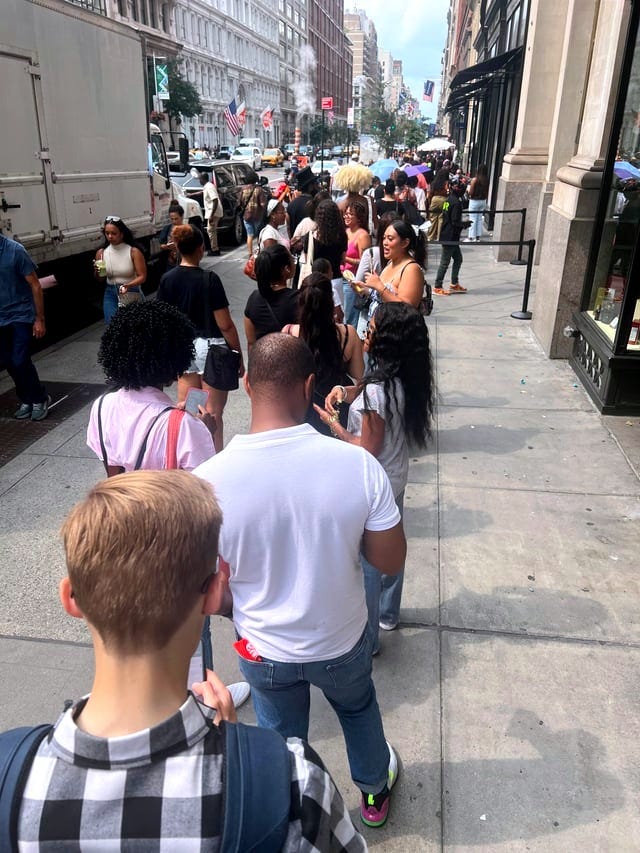
After conquering digital, Lattafa has begun testing the physical world. This year it hosted the “Bite Me Bakery” pop-up in New York to launch its Give Me Gourmand line (WWD).
TikTok fuels discovery, but scent still relies on experience. By adopting the visual codes of luxury via curated pop-ups, themed launches, limited editions, Lattafa is signalling its move from algorithmic fame toward physical credibility.
The Arab-Fragrance Deep Economy and the Fast-Fashion Model
Lattafa belongs to a powerful Middle Eastern fragrance economy that’s expanding across every price tier.
- Amouage → boutique luxury and high-art storytelling, extraits from $395 to $550.
- Kayali → influencer-led prestige, once a Sephora bestseller, positioned around $100.
- Ajmal → regional mainstay with over 300 fragrances and a vast wholesale network across the Gulf and South Asia.
- Lattafa → Amazon-first, globally scaled, bottles under $50 and an estimated 20–40 new launches each year.
This ecosystem reflects a shared cultural fluency in scent — but divergent commercial strategies. Where Amouage focuses on heritage and scarcity, Lattafa and Ajmal build scale through vertical integration, owning much of the formulation, filling, and packaging process. That control translates to speed: new scents can move from concept to shelf in a few months rather than seasonal cycles.
It’s a rhythm closer to fast fashion than fine fragrance — constant newness, high turnover, and immediate availability across Amazon, TikTok Shop, and hundreds of local e-retailers. Yet the sensibility remains distinctly Arab: opulent packaging, rich oud-amber compositions, and a deep cultural association with perfuming as daily ritual.
As beauty analyst Mathilde Riba told WWD, “Sweet Arab perfumes, which fuse gourmand notes with oud and resinous accords, have seen remarkable traction.” Lattafa has simply adapted that tradition to modern distribution logic where the fragrance counter has been replaced by the algorithm.
The Pokémon Psychology: Gotta Catch ’Em All
Lattafa’s edge lies in scale. Fragrantica lists over 300 perfumes; the company claims more than 2,000 products across categories. Fans estimate 20–40 new launches each year.
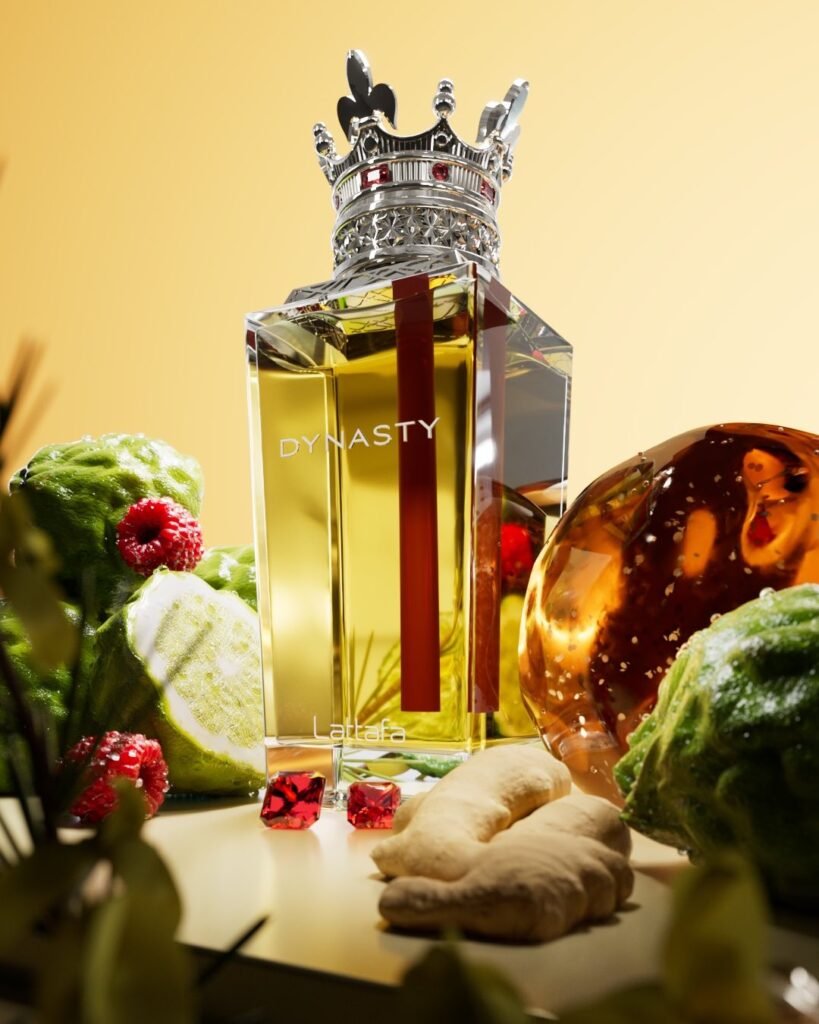
This creates a kind of Pokémon economy: a gamified approach to ownership. Each “inspired by” release mirrors a cult classic: Nishane Anibecomes Nasheet, BDK Gris Charnel becomes Liam Grey. The ornate bottles, priced accessibly, encourage repeat buying and display.
Collectors showcase entire “Lattafa armies” online. One Redditor joked:
“Three or four Lattafas add up to a bottle of olive oil—but it’s impossible to stop.”
Ownership becomes a game of completion. The model mirrors the mechanics of sneaker drops and Shein hauls, where novelty and accumulation drive loyalty as much as quality.
Business Model Risks and Sustainability
The model works for now, but carries a few tension points:
- Quality control: Some launches, such as Liam Grey or Nasheet, earn praise; others are dismissed as “garish, synthetic-smelling nightmares” (TakeOneThingOff review of Bade’e Al Oud Honor and Glory).
- Clone stigma and IPR exposure: Heavy reliance on duplication weakens brand equity and increases legal risk as Lattafa gains Western visibility.
- SKU fatigue: Endless choice risks consumer burnout.
- Sustainability: Decorative bottles and rapid turnover create waste, an issue global shoppers are beginning to scrutinise.
Still, the algorithm rewards motion. Every release brings new content, new SEO traction, new TikTok chatter.
So What’s Next for Lattafa?
Lattafa has proved that consumers no longer chase prestige for its own sake. They’re willing to trade heritage and scarcity for accessibility, aesthetics, and good-enough quality at the right price. The brand has effectively broken the long-standing link between price and perceived excellence in fragrance.
For a generation raised on TikTok reviews and next-day delivery, the thrill lies in discovery and immediacy, not exclusivity. Lattafa’s success shows that with the right mix of packaging, performance, and price, a $30 scent can command the same excitement once reserved for a $300 bottle.
Heritage perfume houses now face a tougher equation. They won’t emulate Lattafa’s release cadence, but they will have to reconsider the balance between reach and restraint—how to protect brand equity while staying relevant in an algorithmic marketplace.
The big question is whether prestige itself still matters to the next wave of fragrance consumers.