
Africa’s secondhand fashion economy is one of the continent’s most active consumer markets — informal, deeply embedded in daily life, and shaped by affordability, trade flows, and long-standing networks. Clothing circulates within families, passes through open markets, and supports entire communities of traders. Yet despite its scale and cultural centrality, the ecosystem remains largely untouched by digital innovation.
Meanwhile, a new generation is proudly embracing vintage, and global resale platforms such as Depop, Vinted, ThredUp, and Vestiaire Collective are increasingly central to the fashion economy. In Africa, the potential is even greater: secondhand consumption is already the dominant retail behaviour, yet the digital infrastructure to support it has been largely absent.
Enter Vynt app, a resale platform built for African consumers. More than just a marketplace, Vynt formalises a practice that has existed for decades, providing a tech-enabled solution that allows buyers and sellers to transact safely, efficiently, and transparently.
Spotting Opportunity in an Existing Market
In our conversation with the founder, Tolu Okoya-Thomas, she reveals that the idea for the Vynt app grew from her own experience. While working at a law firm, she began selling her clothes on Instagram — and quickly realised the scale of demand.
“People messaged me constantly asking if I could help them sell their items too. Nigerians were already buying and selling secondhand at massive scale. What was missing was a digital environment that unified buyers and sellers in a trusted and organised way. Vynt was created to fill that gap,” she explains.
The app focuses on quality control, transparent pricing, and logistics tailored to African markets, where trust and delivery reliability remain major constraints.
“We’re not trying to introduce thrift. We’re trying to make it visible,” Tolu says. The platform aims to modernise an existing cultural behaviour, giving structure to a market that has long been informal yet highly active.
Raising Capital in an Unfamiliar Market
While the market opportunity was clear, convincing investors was another matter. Many struggled to see the potential of a resale platform in Africa.
“Investors kept asking why Africa would need a resale platform when offline markets already exist,” Tolu recalls. “But that’s the point. The markets are huge, but they aren’t structured. Digitising that behaviour is the opportunity.”
Her experience also reflected structural biases in African tech investment.
“I had investors tell me directly that a fashion market retail app felt too risky for someone without a technical background. It didn’t matter how well I understood the consumer or the economics,” she says.
Eventually, Tolu adjusted her strategy. “I paused fundraising because the time spent justifying the market was slowing our progress. We focused on building and getting traction. Once the numbers started moving, the responses changed,” she explains. The hesitation she faced was not about the validity of the idea but about how African consumer markets — and the founder who does not fit the stereotypical tech profile — are often underestimated.
How Vynt App Works in Practice
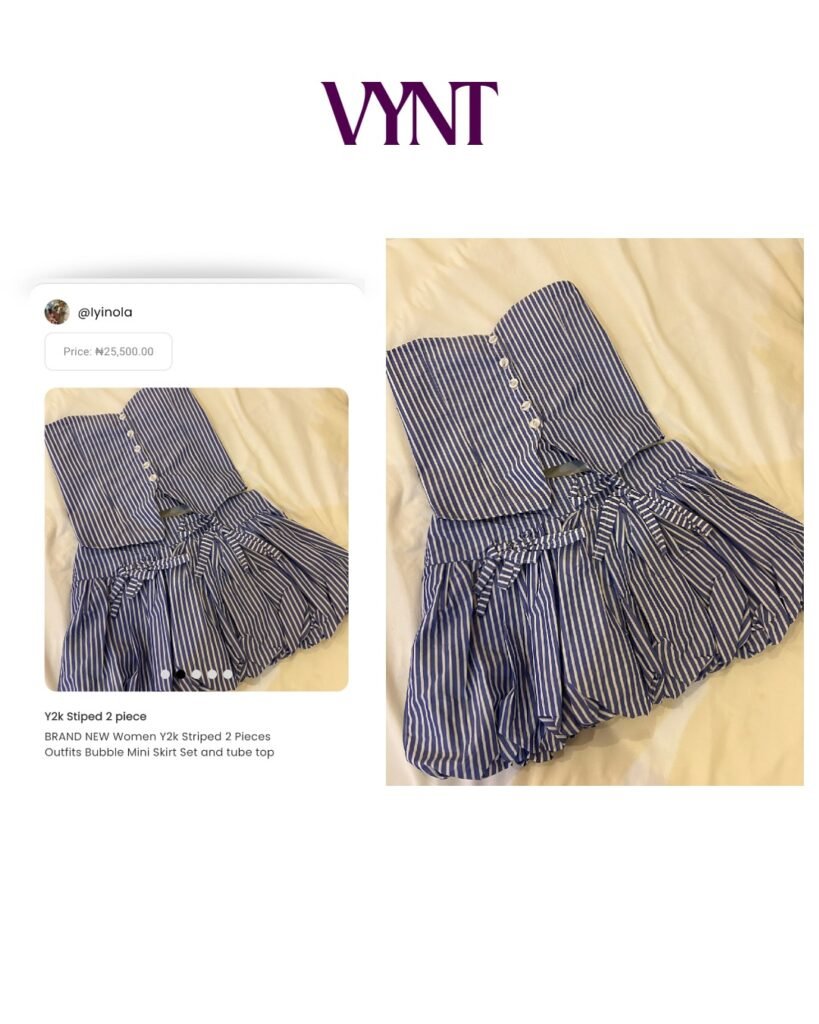
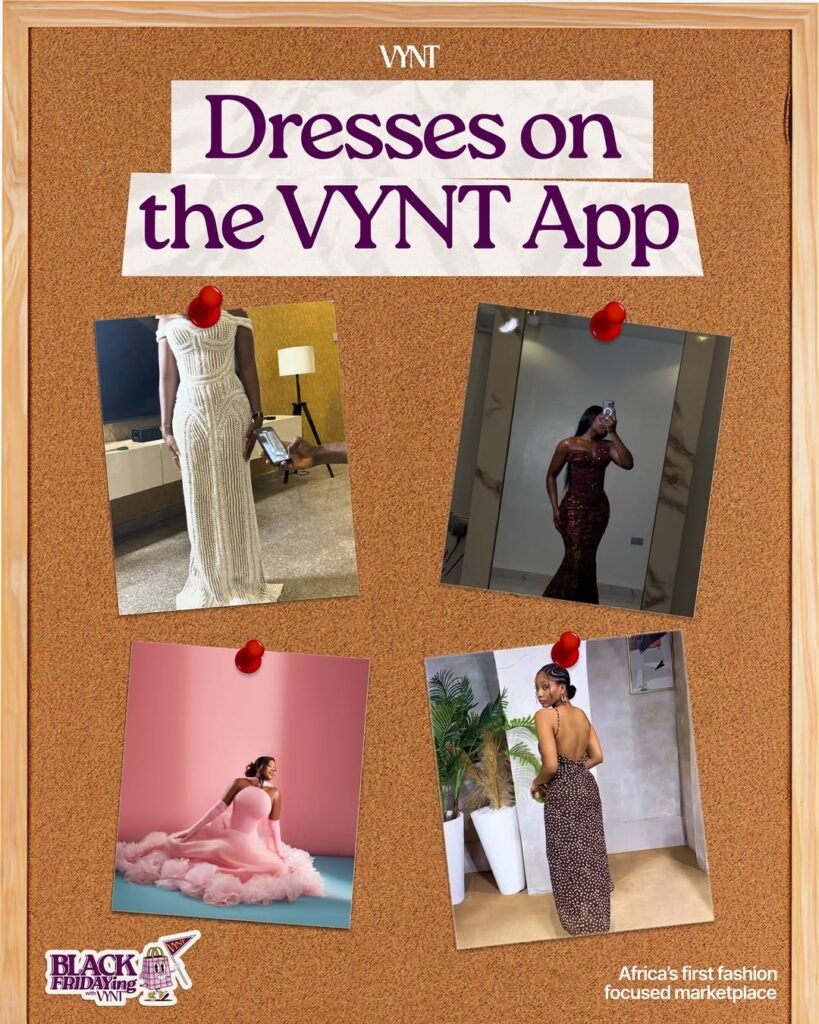
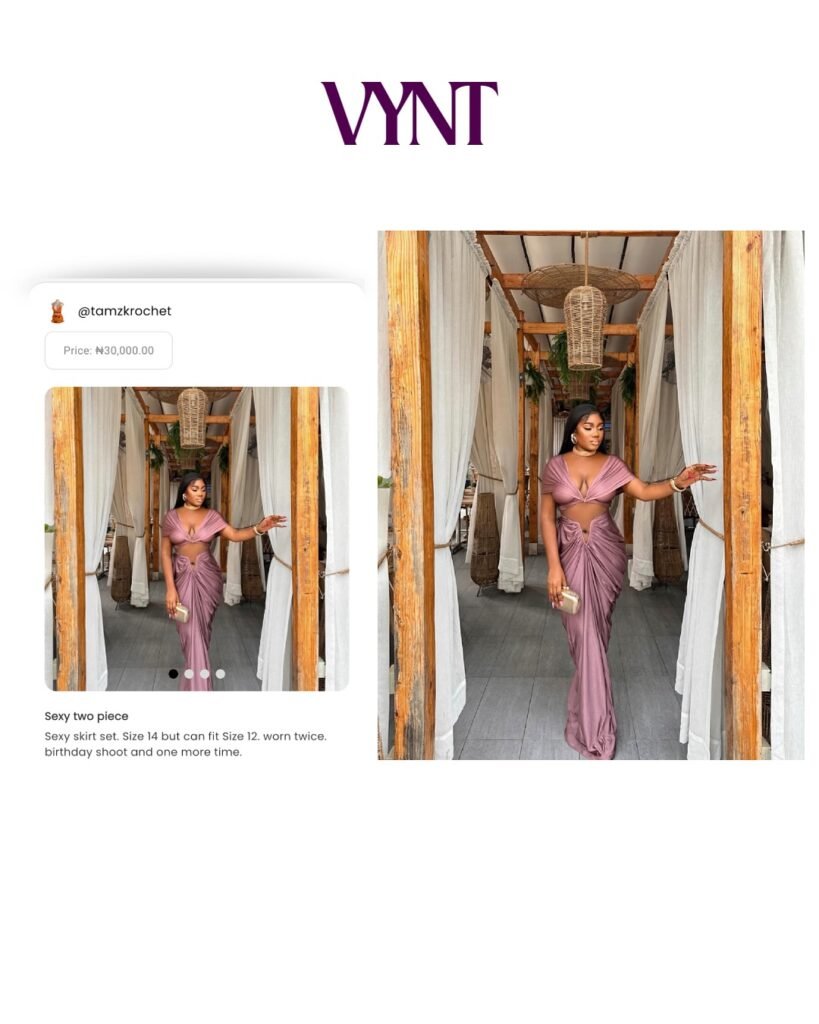
Even with demand validated, logistics and operational structure needed careful design. The app enables users to buy and sell simultaneously. Sellers verify their identity and upload real-life images with accurate descriptions, while Vynt ensures quality and authenticity before listings go live. The platform charges a commission only on successful sales, keeping the revenue model simple and fair.
“We want people to enjoy the thrill of thrifting while knowing they’re safe and supported. Transparency and trust are central to everything we do,” Tolu says.
Through these measures, Vynt app transforms thrift from informal necessity into a modern, culturally relevant marketplace.
Bridging the Logistics Gap
Even with demand validated, logistics presented another critical challenge. Many African cities lack standardised addresses, and last-mile delivery can be inconsistent. Peer-to-peer shipping, common on European resale platforms, is not yet viable.
“You can’t start with peer-to-peer shipping in this market. Sellers send pieces to Vynt, we verify quality and authenticity, and then dispatch them to buyers. It adds cost and slows scaling, but it’s a necessary bridge in a system where logistics providers and digital behaviour norms are still developing,” Tolu explains.
This workaround not only ensures trust and quality for buyers but also underscores a broader infrastructural gap.
“Until we have nationwide address systems and more dependable logistics standards, every digital marketplace has to build its own workaround,” she says, highlighting an opportunity for policy intervention.
Policy and the Path to Circularity
Vynt app’s long-term vision extends beyond resale alone. Tolu envisions a future where circularity is embedded in both consumer behaviour and industry practices, from upcycling to designer collaborations.
“In Europe, luxury houses donate unused fabrics to studios that turn them into new collections. We want a version of that that makes sense here. Circularity shouldn’t only be about buying used. It should include reworking materials and reducing waste across the whole value chain,” she explains.
Government involvement, she argues, could accelerate this transition.
“The government has a key role to play in regulation, in passing laws that support these industries with incentives, in education and exposure, and in creating global awareness for what African designers and manufacturers are capable of,” she says. “If the government and key stakeholders work together, we can build solutions that actually have impact.”
By formalising existing practices and building the necessary infrastructure, Vynt app is creating a marketplace that reflects the realities of African consumers while laying the groundwork for a modern circular fashion economy.
Formalising the Informal
Vynt app illustrates how digital infrastructure can modernise an already vibrant market. By navigating investor scepticism, addressing logistical bottlenecks, and formalising long-standing cultural practices, the platform is building the rails for Africa’s circular fashion economy.
“We’re not building a trend. We’re building the marketplace Africa has always needed,” Tolu concludes.