At the Ralph Lauren 2026 Spring Summer show at New York Fashion Week, the sense of déjà vu felt deliberate. The silhouettes, the tailoring, the polish all echoed Spring/Summer 1999. That repetition is the point.
In an industry built on churn, Ralph Lauren has built an empire on discipline. Where others pivot, it polishes. Where others rebrand, it refines. The result is a house that sells more than clothing. It sells conviction. A 57-year exercise in staying the course and compounding credibility.
Its consistency is not sameness but strategy. A calibrated ecosystem that spans $100 polos to $3,000 Purple Label suits. The lesson is simple: timeless identity scales better than trend chasing ever will.

The Numbers Prove the Strategy
Ralph Lauren’s numbers read like a case study in controlled growth. Even in a turbulent market, the brand is quietly expanding margins, deepening its DTC reach, and proving that consistency converts to profitability.
In FY25, revenue rose 8% to $7.1 billion (about +10% in constant currency). Around 70% of its business now comes from core products — polos, knits, outerwear — the wardrobe constants that define the Ralph Lauren universe.
The brand’s focus on full-price selling and reduced discounting has helped gross margins hold steady, supported by a decisive shift toward direct-to-consumer and international channels.
The brand’s focus on full-price selling and reduced discounting has helped gross margins hold steady, supported by a decisive shift toward direct-to-consumer and international channels.
Beyond the balance sheet, it’s a picture of long-term discipline rather than quick wins, a brand that grows by refining, not reinventing.
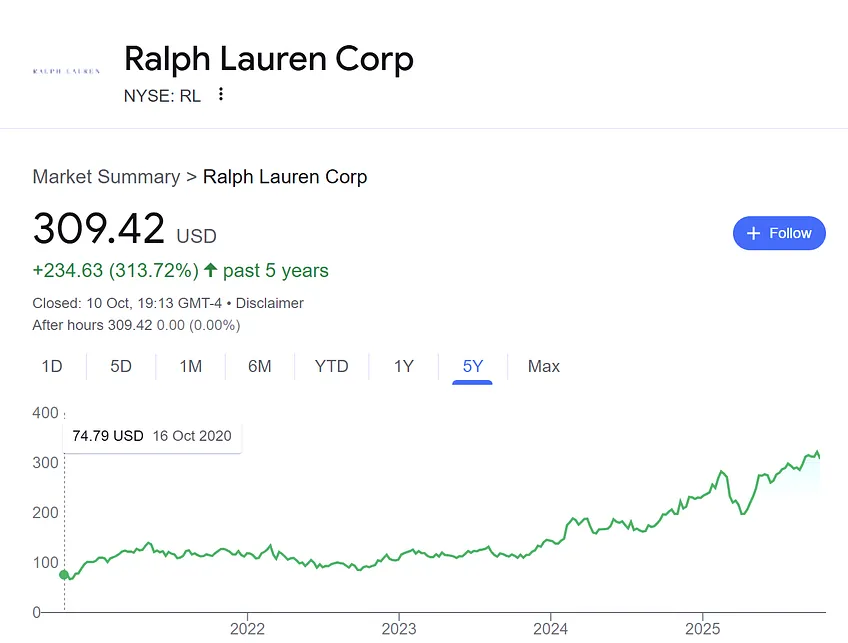
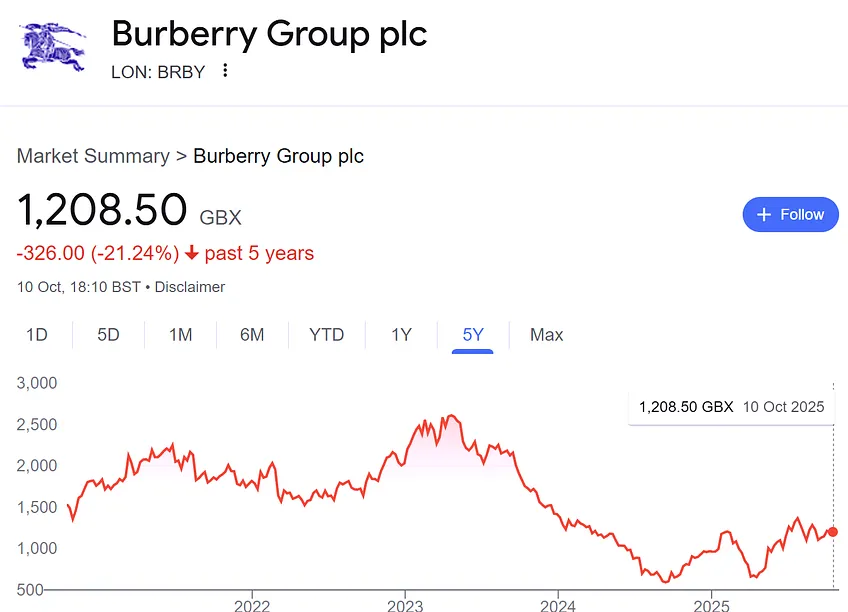
A Tale of Two Brands: Ralph Lauren vs Burberry
Despite being founded nearly a century apart, Ralph Lauren and Burberry have long been kindred spirits: both built on heritage, storytelling, and the quiet power of identity. Yet their trajectories could not be more different.
Burberry, established in 1856, has spent the past decade in a loop of reinvention. From Christopher Bailey’s romantic Britishness to Riccardo Tisci’s streetwear minimalism and Daniel Lee’s recent return to craft and heritage, each creative era brought a new vision but blurred the core. Its recent signs of recovery, praised by investment pundits for refocusing on authenticity and outerwear, suggest that clarity might finally be returning.
Ralph Lauren, born in 1967, took the opposite path. Rather than rewriting itself, it perfected its code. The polos, the tailoring, the soft Americana they evolve but never drift. Even as markets shift, Ralph Lauren’s message stays the same: confidence, optimism, and belonging.
The result is a study in brand physics. One house moves in cycles of reinvention; the other compounds through consistency. Burberry is rediscovering its roots. Ralph Lauren never left them.
The Multi-Price Point Divide
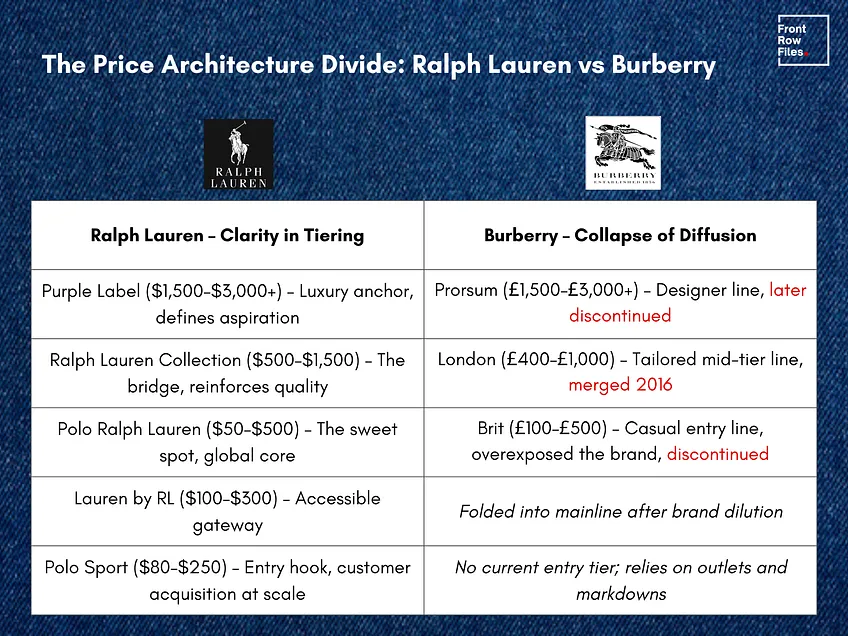
Ralph Lauren built an empire on accessibility without dilution. Its universe spans a $100 Polo Sport tee to a $3,000 Purple Label suit — a 100x price ladder that still feels like one brand. Each tier plays a role: Purple Label defines aspiration, Ralph Lauren Collection bridges quality and reach, Polo anchors the core, and Lauren by Ralph Lauren opens the door to new customers. Together they create a system that captures every customer, at every stage of their life.
Burberry once tried the same. Through its diffusion line: Burberry Prorsum, Brit, and London — the brand sought to balance luxury and accessibility. But the architecture collapsed under its own complexity. The lines blurred, the hierarchy disappeared, and the logo became overexposed. By 2016, all sub-labels were folded back into one, in a bid to rebuild coherence.
Ralph Lauren, by contrast, never lost control of its tiers. Each price point was designed to reinforce the brand, not fragment it. The strategy proved that breadth doesn’t have to mean confusion when your identity is clear, every tier feels connected.
Today, while Burberry is still rebuilding clarity around outerwear and British craft, Ralph Lauren has turned consistency into compounding equity.
Risks That Come With Refusing to Waver
Consistency is Ralph Lauren’s greatest asset, but holding that line demands vigilance:
- Volatility Across Supply & Cost
Tariffs, input inflation, currency fluctuations — these pressures are unrelenting. To protect margins, RL must stay nimble in sourcing, logistical design, and cost discipline. Its advantage lies in foresight, not luck. - Consumer Price Sensitivity
When every dollar counts, the premium must feel earned. If RL leans too far on price without narrative reinforcement, it risks becoming just another “expensive” label. The brand’s storytelling and product innovation must stay as sharp as its heritage. - Operational Stretch & Execution
Scaling DTC stores, regional assortments, wholesale pruning — all of this is high risk. A misstep in supply, store experience, or inventory allocation could erode trust faster than a fashion misfire ever could. - Brand Fatigue & Overfamiliarity
Repetition built strength — until it becomes rote. RL must evolve in creative expression (capsules, partnerships, curated drops), not reinvent its identity. Its job going forward is to surprise without betraying itself. - Succession & Creative Continuity
Ralph Lauren remains the brand’s symbolic anchor. But as leadership transitions eventually approach, the successor must maintain respect for the DNA while reading future signals. Misalignment could fracture the brand’s coherence.
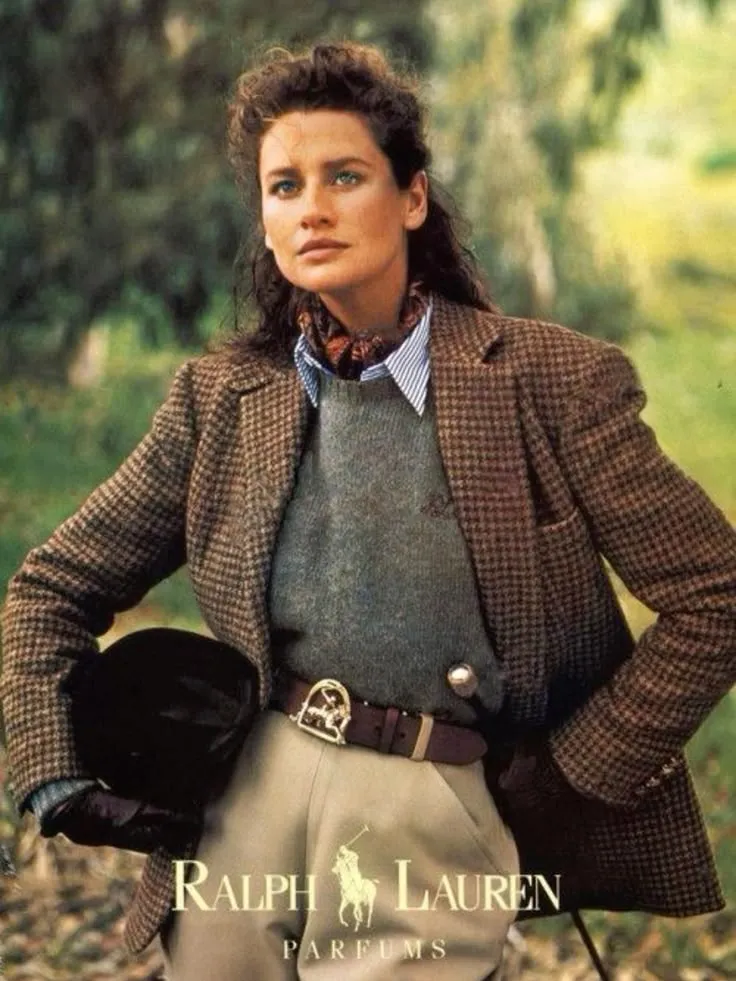
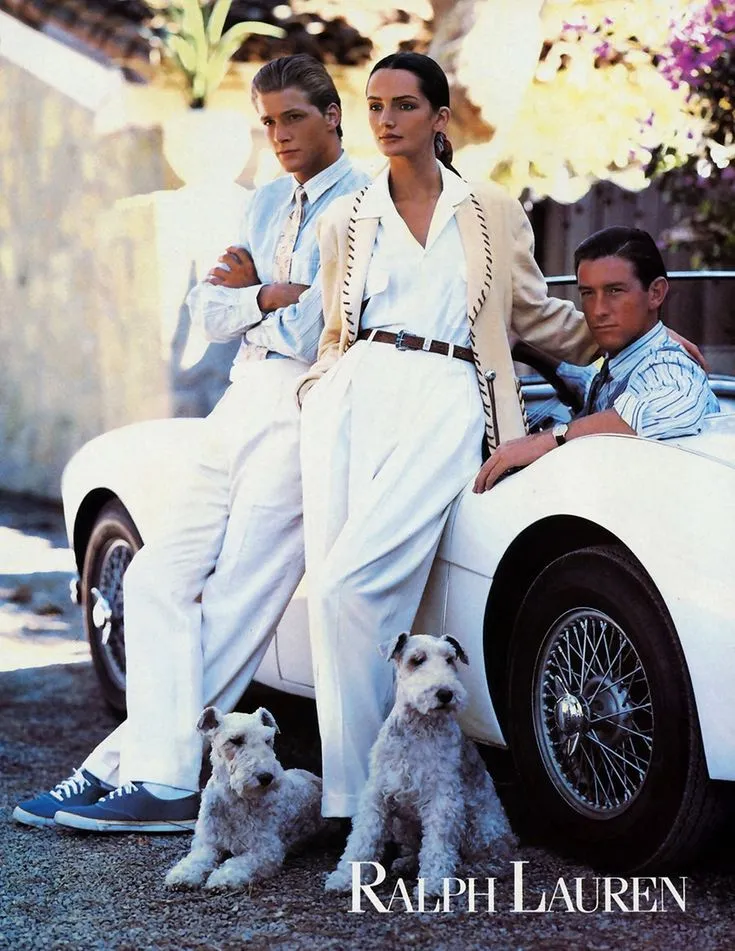
When the quiet luxury/old money aesthetics took over the fashion industry, the reference point was Ralph Lauren.
Final Thoughts: Consistency as a Long Game
Ralph Lauren doesn’t chase the flash or bow to the whims of trends. It plays the long game. It protects pricing rather than succumbing to discount wars. It builds desire instead of chasing hype. It stretches the American dream instead of tethering it to history alone.
In a world where disruption is the default, Ralph Lauren’s radical act is to remember who it is — every single season — and to resist fads in favor of identity. That refusal isn’t rigidity. It’s resilience. Over decades, downturns, and cultural shifts, consistency becomes a form of compounding belief. And belief, once earned, is hard to dislodge.
Read also: What happened to Escada?